Rice is dangerous for babies?
When Subin, our founder, was raising her first daughter in Austin, Texas, she was shocked to be told by a pediatrician that it is dangerous to feed her baby rice and follow the Korean diet.
Rice grown in the U.S. is exposed to ~2x higher heavy metal levels compared to Korea, due to soil pollution and loose regulations around agricultural safety.
The problem beyond rice safety.
As we looked closer at the U.S. baby food aisle, the problem with food safety and quality nutrition became clearer. Independent testing in 2021 revealed that nearly 95% of baby food products tested contained heavy metals above FDA guidelines.
Ingredient-wise, shelves were dominated by repetitive formulations built around one or two base ingredients, often paired with high sugar content from fruits to extend shelf life rather than support infant development.
Parents were left choosing between convenience and nutritional balance, with few truly safe, nutritionally balanced, or culturally inclusive options.
BARI was created to change that.
Rice is the foundation of nearly every meal in Asian cultures, consumed by more than half of the world every day.
To find a solution around safer rice, Subin convinced her sister Suahn to move back to South Korea, where agricultural practices and food safety systems are among the most tightly regulated in the world.
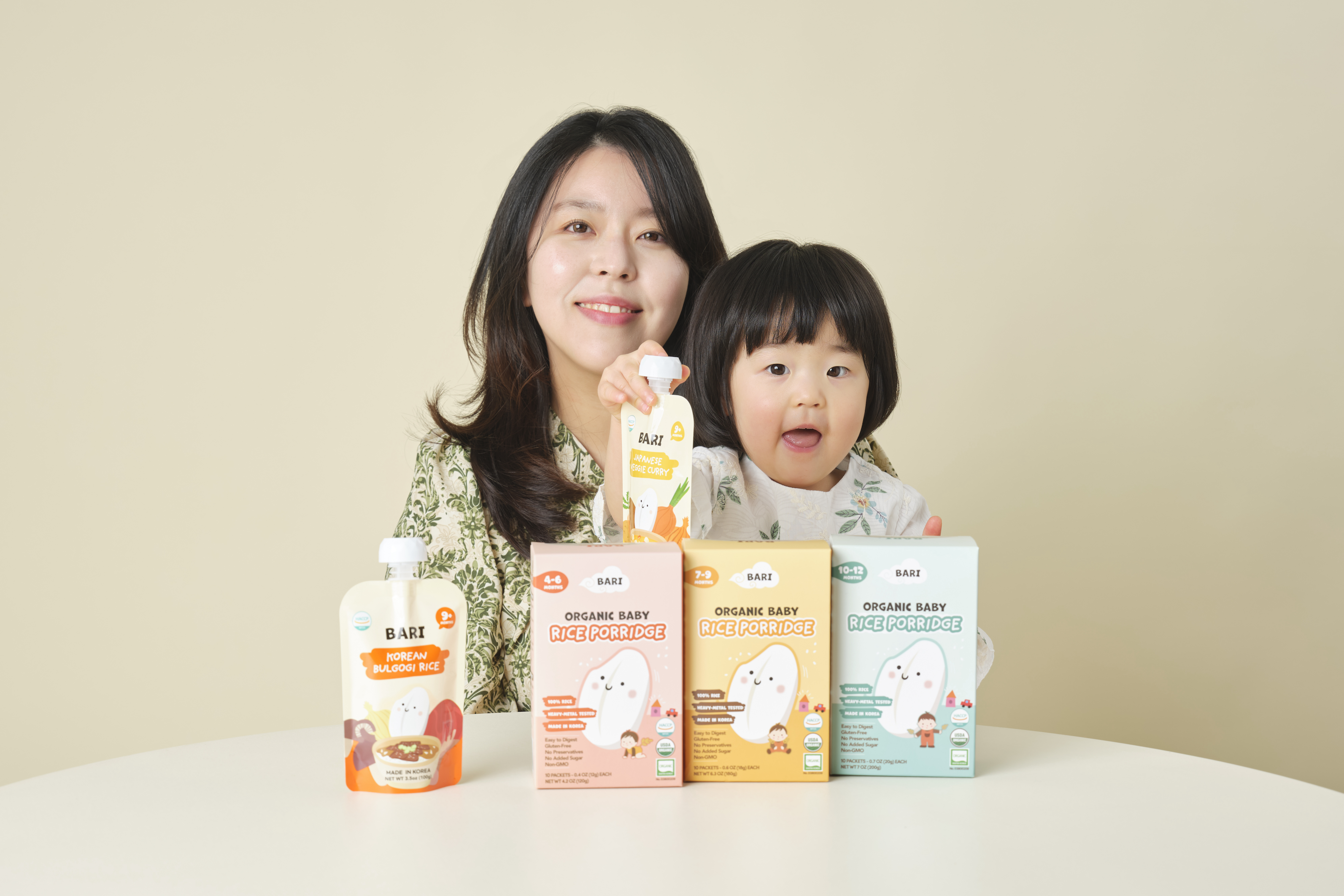
BARI uses freshly milled, certified organic Korean rice and applies rigorous third-party testing to every production batch.
Our products include rice porridge, sugar-free and caffeine-free baby teas, and Asian-inspired ready-to-eat meal pouches, made with infant-grade safety standards.
.png?w=962&h=297)