How to understand the seals on baby food packaging, what specific safety or quality question each one answers (and more importantly, doesn’t).
3-minute read
What to Know
- Different certification marks evaluate different parts of the food system.
- Some focus on ingredients or agricultural practices, while others evaluate finished products, manufacturing processes, or facilities.
- The questions to ask yourself: “What exactly does this certification cover? What does this not cover?”
A certification mark can tell parents something important, but it cannot tell them everything. USDA Organic, Non-GMO Project Verified, Clean Label Project certification, and manufacturing systems such as HACCP each provide a seal of trust across different parts of the food system. Understanding those distinctions helps parents interpret baby food certifications as useful pieces of a broader safety picture.
USDA Organic
USDA Organic certification primarily describes how agricultural ingredients are produced and handled. A packaged food labeled “organic” must contain at least 95% certified organic ingredients, excluding salt and water. The key requirements for organic labeling includes the following:
- No Synthetic Chemicals: Crops must be grown without most synthetic fertilizers, toxic pesticides, or herbicides.
- No GMOs: Genetically modified organisms and bioengineering are strictly prohibited in both seeds and ingredients.
- Livestock Standards: Animals raised for meat, eggs, or dairy must be fed organic feed, given no routine antibiotics or synthetic hormones, and kept in conditions that accommodate natural behaviors.
- Soil Integrity: Farmland must be free of prohibited synthetic inputs for a minimum of three years before harvest.
A USDA-accredited certifier reviews agricultural practices, permitted inputs, handling procedures, ingredient composition, and labeling.[1]
For parents, the seal provides verified information about organic production standards.
Questions about contaminants or finished-product testing require separate information because those are outside the seal’s central purpose.
Non-GMO Project Verified
Non-GMO Project Verified indicates that a product meets the organization’s third-party standard for GMO avoidance. The evaluation can include ingredients, supply-chain documentation, segregation practices, and targeted GMO testing where required by the standard.[2]
The organization describes its mark as evidence of compliance with a GMO-avoidance standard rather than a literal guarantee that a product contains absolutely no genetically modified material.
Clean Label Project Certification
Clean Label Project programs focus on finished-product testing for selected environmental and industrial contaminants. Depending on the specific certification or award, laboratory analysis may include heavy metals, pesticides, plasticizers, and other substances identified in the program’s standard.[3]
Because program requirements can differ, parents can look for the name of the specific award or certification and review which substances and testing criteria it includes.
Certified Gluten-Free
In the United States, packaged foods using a “gluten-free” claim must contain less than 20 parts per million of gluten under FDA rules.[4] Private Certified Gluten-Free programs may add their own ingredient reviews, manufacturing requirements, facility audits, or finished-product testing.
This certification is particularly relevant for families managing celiac disease or gluten-related medical needs. Parents should consult their pediatrician if they have questions about a baby’s symptoms or dietary restrictions.
Kosher
Kosher certification confirms that ingredients, processing aids, equipment, and production procedures comply with Jewish dietary laws under the certifying organization’s standard.[5] It may also address the separation of meat, dairy, and pareve foods during manufacturing.
Halal
Halal certification evaluates compliance with Islamic dietary requirements. Depending on the certifier, reviews may include ingredients, processing aids, equipment, sanitation practices, storage, and measures to prevent contact with non-halal materials.[6]
Certified Vegan
A Certified Vegan mark indicates that an individual product meets the certifier’s requirements regarding animal-derived ingredients and byproducts. Vegan Action, for example, reviews ingredients, processing aids, animal-testing policies, and procedures used when equipment is shared with non-vegan products.[7]
Vegan certification and allergen labeling answer separate questions. A vegan food may still contain ingredients such as wheat, soy, sesame, peanuts, or tree nuts, so the ingredient list and allergen statement remain important.[8]
Manufacturing and Facility-Focused Food Safety Systems
HACCP, ISO 22000, SQF, BRCGS, and FSSC 22000 focus primarily on how food safety is managed during manufacturing. HACCP identifies significant biological, chemical, and physical hazards and establishes controls at critical production stages.[9] ISO 22000 provides requirements for a documented food-safety management system.[10]
SQF and BRCGS add audited requirements covering areas such as supplier controls, sanitation, traceability, corrective actions, facility practices, and verification.[11][12] FSSC 22000 is another ISO-aligned food-safety management certification scheme. The precise scope depends on the standard, facility activities, certificate, and audit program.
What Each Certification Covers at a Glance
|
Certification or system |
Main focus |
Ingredients |
Manufacturing process |
Finished-product testing |
Heavy metals |
|
USDA Organic |
Organic production |
✓ |
Organic handling controls |
Not the core purpose |
Not included |
|
Non-GMO Project Verified |
GMO avoidance |
✓ |
Supply-chain controls |
Targeted GMO testing may apply |
Not included |
|
Clean Label Project |
Selected contaminants |
Not the primary focus |
Not the primary focus |
✓ |
✓ under applicable program |
|
Certified Gluten-Free |
Gluten control |
✓ |
✓ |
Varies by certifier |
Not included |
|
Kosher |
Jewish dietary compliance |
✓ |
✓ |
Not the primary focus |
Not included |
|
Halal |
Islamic dietary compliance |
✓ |
✓ |
Not the primary focus |
Not included |
|
Certified Vegan |
Animal-derived materials |
✓ |
Some shared-equipment controls |
Not the primary focus |
Not included |
|
HACCP |
Hazard identification and control |
Hazard-based review |
✓ |
When included in the safety plan |
When included in the hazard plan |
|
ISO 22000 |
Food-safety management |
Supplier and hazard controls |
✓ |
Based on the management system |
Based on defined controls |
|
SQF / BRCGS / FSSC 22000 |
Audited facility systems |
Supplier controls |
✓ |
Based on certification scope |
Based on certification scope |
|
FDA Facility Registration |
Regulatory registration |
— |
— |
— |
— |
Certification scopes and testing requirements can vary by certifier, program, facility, and certificate. Check the current standard for product-specific details.
What does it NOT tell you?
Some important baby food safety questions may require information beyond a certification mark:
- Heavy metals: Lead, arsenic, cadmium, and other environmental contaminants can enter food through soil, water, or air—including food produced under organic standards.[14]
- Finished-product testing: A laboratory report answers a specific question about the specific samples tested. It should not automatically be interpreted as testing every batch for every substance.[15]
- Microplastics: Most traditional seals do not address them. FDA says research and standardized methods are still developing and that current evidence does not demonstrate that detected levels in food pose a human-health risk.[16]
- Microbial contamination: HACCP and related systems may include microbial controls, but a facility certificate is not proof that every individual package was laboratory-tested.[9]
- Packaging: Packaging hygiene and food-contact materials are separate considerations from ingredient certification. FDA regulates substances used in materials that contact food.[17]
How BARI Uses Multiple Layers of Safety Controls
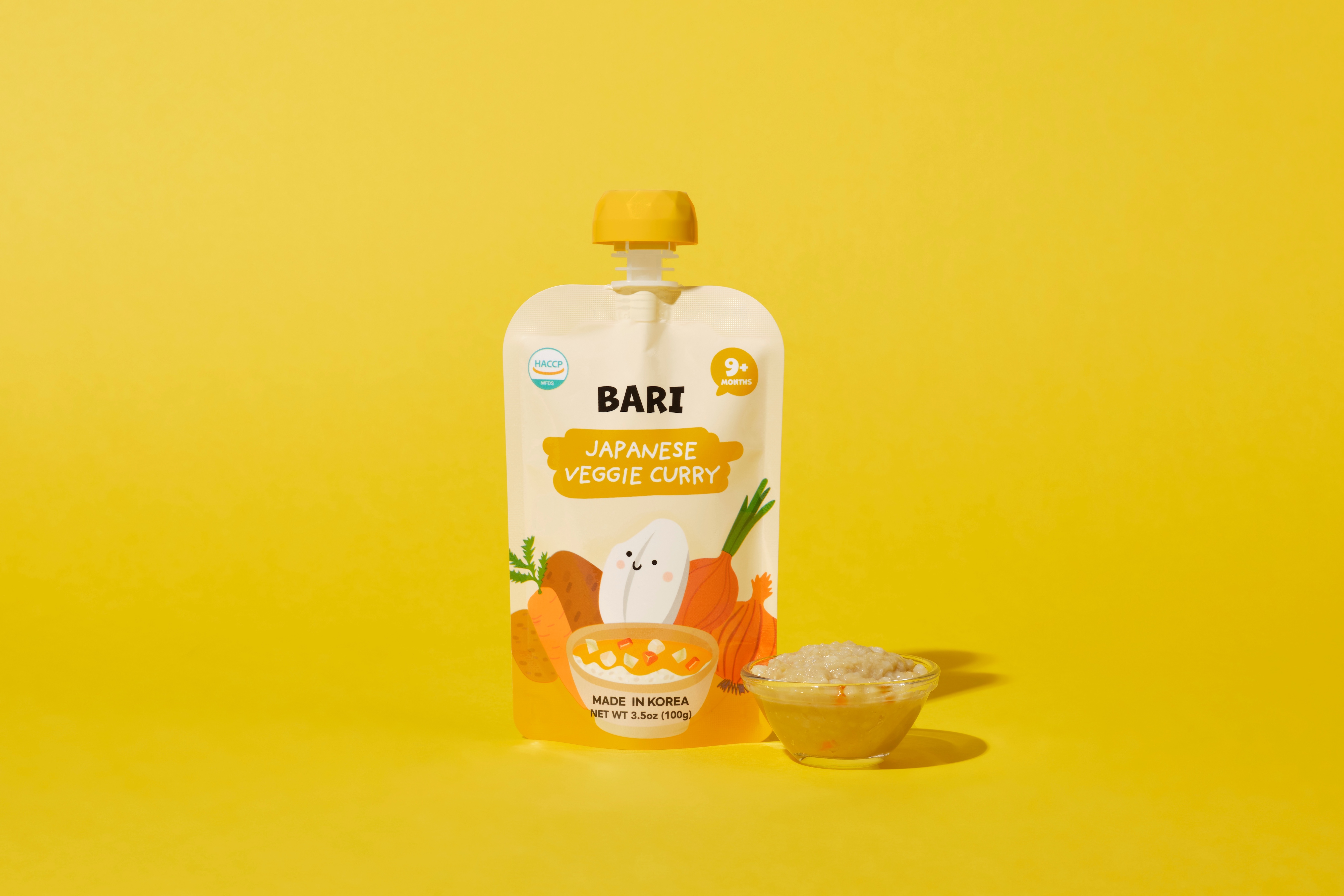
BARI distinguishes between what certifications evaluate and which questions require additional evidence. Our manufacturing operates under HACCP, ISO 22000, and Korean GMP certification. The facility also maintains U.S. FDA Food Facility Registration and Korean government certification for organic handling
BARI uses additional testing where needed, including microplastics testing supported by laboratory reports and microbiological testing of packaging materials. These layers address manufacturing processes, regulatory compliance, the finished product, and packaging together.

Practical Takeaways for Parents
Certification marks are most useful when parents understand the specific question each one answers.
- Identify whether a mark applies to farming, ingredients, the finished product, manufacturing, or the facility.
- Look for the certifier and certification scope instead of relying on the logo alone.
- Consider certifications alongside ingredients, allergens, Nutrition Facts, age guidance, and available testing information.
- Ask your pediatrician about allergens, textures, feeding readiness, or nutritional needs specific to your baby.
BARI looks at baby food safety beyond a single seal or logo. We use certifications for the areas they are designed to evaluate and additional testing for important questions those certifications may not answer—because baby food safety requires looking at ingredients, manufacturing, the finished product, and packaging together.
Follow BARI at @ricebari_official on Instagram and TikTok for feeding ideas, new flavors, and updates from our kitchen.
BARI is available on Amazon, Weee!, and select independent retailers.
Sources
[1] U.S. Department of Agriculture, Agricultural Marketing Service. “Labeling Organic Products.” n.d. https://www.ams.usda.gov/rules-regulations/organic/labeling. Accessed September 4, 2026.
[2] Non-GMO Project. “What Is Non-GMO Project Verified?” n.d. https://www.nongmoproject.org/butterfly-label/. Accessed September 4, 2026.
[3] Clean Label Project. “Clean Label Project Certification.” n.d. https://cleanlabelproject.org/. Accessed September 4, 2026.
[4] U.S. Food and Drug Administration. “‘Gluten-Free’ Means What It Says.” n.d. https://www.fda.gov/consumers/consumer-updates/gluten-free-means-what-it-says. Accessed September 4, 2026.
[5] Chicago Rabbinical Council. “A Basic Overview of Kosher.” n.d. https://crckosher.org/a-basic-overview-of-kosher/. Accessed September 4, 2026.
[6] American Halal Foundation. “AHF Halal Standards.” n.d. https://halalfoundation.org/ahf-halal-standards/. Accessed September 4, 2026.
[7] Vegan Action. “Certification.” n.d. https://vegan.org/certification. Accessed September 4, 2026.
[8] U.S. Food and Drug Administration. “Food Allergies.” n.d. https://www.fda.gov/food/nutrition-food-labeling-and-critical-foods/food-allergies. Accessed September 4, 2026.
[9] U.S. Food and Drug Administration. “HACCP Principles & Application Guidelines.” February 25, 2022. https://www.fda.gov/food/hazard-analysis-critical-control-point-haccp/haccp-principles-application-guidelines. Accessed September 4, 2026.
[10] International Organization for Standardization. “ISO 22000—Food Safety Management.” n.d. https://www.iso.org/iso-22000-food-safety-management.html. Accessed September 4, 2026.
[11] Safe Quality Food Institute. “What Is SQF?” n.d. https://www.sqfi.com/our-program/what-is-sqf. Accessed September 4, 2026.
[12] BRCGS. “Food Safety.” n.d. https://www.brcgs.com/our-standards/food-safety. Accessed September 4, 2026.
[13] U.S. Food and Drug Administration. “Guidance for Industry: Registration of Food Facilities and Other Submissions.” March 2024. https://www.fda.gov/media/85098/download. Accessed September 4, 2026.
[14] U.S. Food and Drug Administration. “Environmental Contaminants in Food.” April 29, 2026. https://www.fda.gov/food/chemical-contaminants-pesticides/environmental-contaminants-food. Accessed September 4, 2026.
[15] U.S. Food and Drug Administration. “Testing Results for Arsenic, Lead, Cadmium and Mercury.” April 29, 2026. https://www.fda.gov/food/environmental-contaminants-food/testing-results-arsenic-lead-cadmium-and-mercury. Accessed September 4, 2026.
[16] U.S. Food and Drug Administration. “Microplastics and Nanoplastics in Foods.” July 24, 2024. https://www.fda.gov/food/environmental-contaminants-food/microplastics-and-nanoplastics-foods. Accessed September 4, 2026.
[17] U.S. Food and Drug Administration. “Food Ingredients & Packaging.” July 6, 2023. https://www.fda.gov/food/food-ingredients-packaging. Accessed September 4, 2026.